Loading...
TOS Thousand Oaks Sunrooms designs and builds custom sunrooms, patio enclosures, and all season rooms for Calabasas homeowners. We navigate HOA architectural review for gated communities like The Oaks, pull permits through the City of Calabasas, and engineer every project for the area's hillside lots, wildfire zone requirements, and high-value homes where design quality matters.
Calabasas homes in gated communities and hillside neighborhoods are not a one-size-fits-all situation - the architecture, lot orientation, and HOA design guidelines all shape what is possible. Our sunroom design service starts with understanding your home's existing architecture so the new room looks intentional, not added-on - and so the HOA submission has the detail it needs to get approved without revisions.
Homes in The Oaks of Calabasas and similar communities are often large, detailed, and built to specific architectural standards. A custom sunroom on one of these properties needs to match the framing profiles, finish materials, and proportions of the main house - generic catalog rooms do not fit here. We design and build to the specific requirements of each Calabasas home, including HOA-mandated exterior finishes.
Many Calabasas homes have large covered patios that see heavy use in spring and fall but sit empty during the hottest summer months and the occasional cold, rainy January. Enclosing that patio with glass panels and proper insulation converts it into a room that works year-round - and, in Calabasas, a well-done enclosure on a large lot reads as an upgrade, not a workaround.
Calabasas sits inland enough that summer heat can push past 100 degrees, and winter nights drop into the low 40s in the canyon neighborhoods. An all season room with insulated roof panels and thermally broken framing handles that range without drafts or overheating - so the room is comfortable whether you are using it during a January rainstorm or a July afternoon.
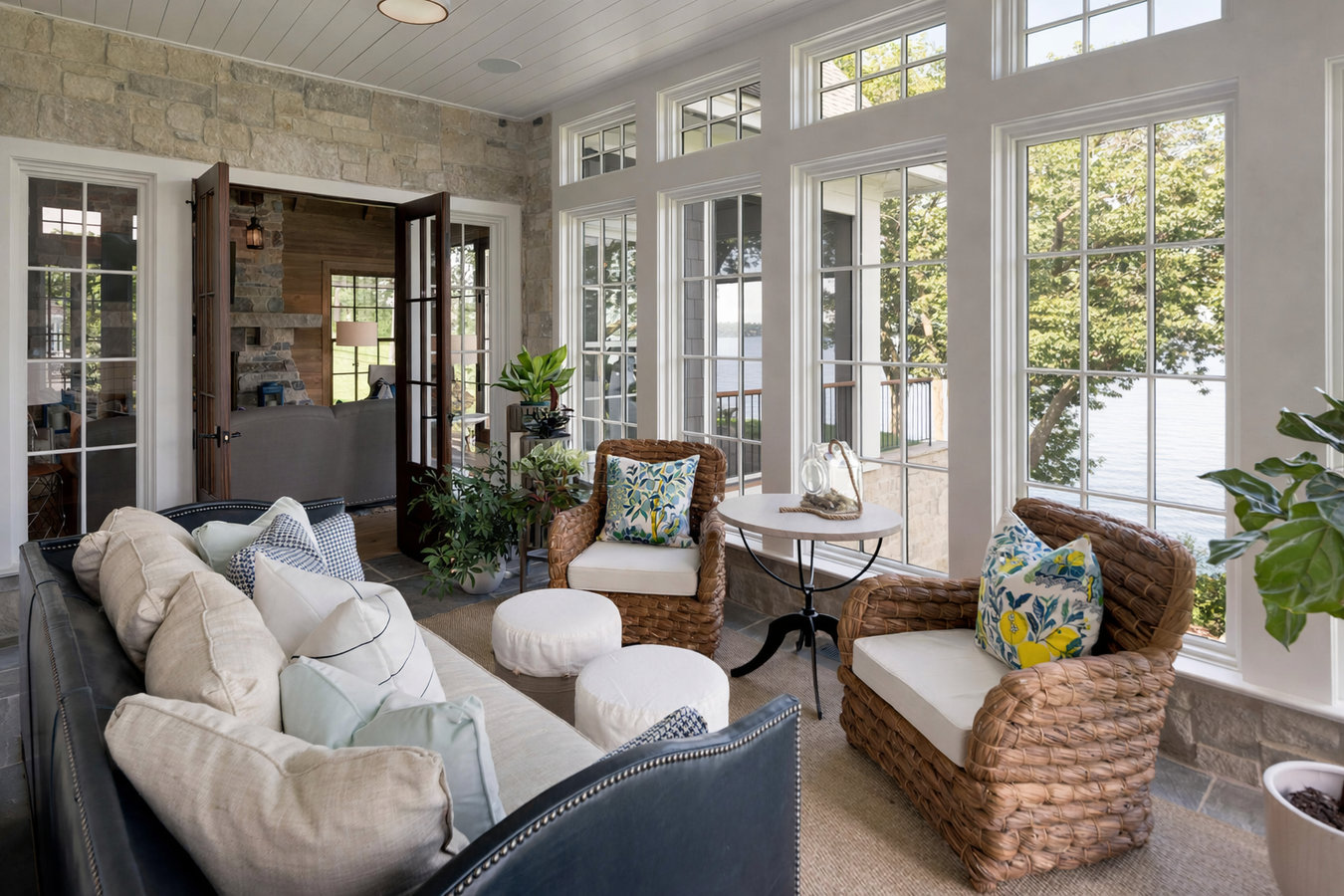
Larger Calabasas properties on canyon-adjacent lots often have sightlines worth designing around - views of the Santa Monica Mountains foothills, seasonal creek corridors, or open hillsides that most homeowners want to bring into their living space. A fully glazed four-season sunroom on one of these properties captures those views while keeping the room properly conditioned and connected to the home's main HVAC system.
Vinyl-framed sunrooms hold up well in Calabasas's climate - UV-stable and low maintenance, which matters in a market where outdoor surfaces take a hard beating from intense summer sun and occasional Santa Ana wind events. For homeowners who want a durable, clean-looking room without the upkeep of painted wood or the cost of premium aluminum, a vinyl sunroom is a practical fit for this area.
Calabasas is not a typical suburban job site. A large share of homes sit inside gated communities with active HOAs - and those HOAs have real authority over what gets built and what it looks like. Architectural review committees in places like The Oaks of Calabasas review exterior additions before permits are pulled, which means a contractor who shows up without understanding that process is going to cause delays and frustration. Beyond the HOA layer, the homes themselves are substantial - 4,000 to 8,000 square feet in many of the gated communities - and a sunroom addition needs to be designed to match the scale and finish of the main house, not bolted on as an afterthought. The median home value in Calabasas sits around $1.3 million, and homeowners here are not looking for the cheapest option; they are looking for the right one.
The terrain adds another layer. Many Calabasas neighborhoods sit on hillsides in the Santa Monica Mountains foothills, and hillside lots have soil, drainage, and foundation conditions that flat-lot contractors are not equipped to handle. The clay and decomposed granite soils common in this area shift seasonally - wet in winter, dry and contracted in summer - which is a leading cause of cracked driveways, shifting slabs, and retaining wall failures throughout the area. The Woolsey Fire of 2018 burned through parts of Calabasas and the surrounding hills, and the fire hazard severity zone designation for most of the city means that any new addition must use fire-resistant and ember-resistant materials as specified by the California Building Code. These are not details to discover on the job site - they need to be part of the design from the first conversation.
Our crew works throughout Calabasas regularly, and we understand the local conditions that affect sunroom contractor work here. Calabasas incorporated in 1991, and building permits for new construction and additions run through the City of Calabasas Community Development Department. We know the permit process and what the plan reviewers look for, including the fire-hazard-zone documentation that Calabasas projects require.
Calabasas is a city that most people identify by its landmarks. The Commons at Calabasas on Calabasas Road is the central gathering spot for most residents - shops, restaurants, and a gathering space that most families in town know well. Las Virgenes Road runs north-south through the city and is the main corridor connecting the hillside neighborhoods to the 101. Many of the gated communities, including The Oaks and Calabasas Park Estates, sit off streets that branch east and west from Las Virgenes. Homes in these communities are larger, newer, and more architecturally formal than the older 1970s ranch homes on the west side of town near the city limits. The Leonis Adobe on Calabasas Road is one of the oldest standing structures in the San Fernando Valley area and a reference point most long-time Calabasas residents navigate by.
We also serve homeowners in nearby Chatsworth, which sits just over the county line to the east in the San Fernando Valley and shares many of the same climate conditions and building age profile as the older parts of Calabasas. Homeowners in Agoura Hills, which borders Calabasas to the west, also call on us regularly - the two cities share the same wildfire zone, similar housing stock from the 1970s-1990s building era, and much of the same terrain.
Reach out by phone or through the contact form and we will respond within one business day. Let us know whether your home is in a gated community - that affects what documentation we prepare from the start.
We visit your Calabasas property to assess the lot, existing structure, and HOA design guidelines. We discuss cost and design options at this visit - no vague ranges, because high-value Calabasas homes deserve a real conversation about what the project will involve.
For gated community projects, we prepare the HOA architectural review package and submit it alongside or ahead of the city permit application. We manage both tracks so you are not coordinating between two separate approval processes on your own.
On-site work typically takes two to four weeks once permits are approved. We complete all required city inspections, close out the permit, and walk through the finished room with you before calling the job done.
We work in gated communities throughout Calabasas and handle the HOA approval process as part of our service. Reach out and we will respond within one business day.
(805) 906-7459Calabasas is a city of roughly 24,000 people in western Los Angeles County, incorporated in 1991 after years of unincorporated suburban development along the Ventura Freeway. It sits in the foothills of the Santa Monica Mountains, and that geography shapes the city's character - most neighborhoods are quiet, low-density, and surrounded by open hillsides and canyon land rather than dense urban development. The city is known for a high owner-occupancy rate, above-average household incomes, and a housing stock that skews toward large single-family homes on real lots rather than apartments or condominiums. The Commons at Calabasas, the outdoor shopping and dining center on Calabasas Road, is the gathering point that most residents think of as the center of town. Calabasas High School, on the east side of the city near the 101, serves as another community anchor that most families in the area know well.
The housing stock spans roughly two eras. Older homes from the 1970s and 1980s, many in ranch and traditional styles with stucco exteriors, sit on the west side of the city and along streets that predate the incorporation. Newer homes in gated communities - The Oaks of Calabasas, Calabasas Park Estates, and others - were built from the late 1990s through the 2000s and tend to be larger, more formally designed, and subject to HOA architectural review for any exterior changes. These two different building eras mean Calabasas jobs vary significantly in scope and complexity. Heading east from Calabasas along the 101, Chatsworth is the next community in the San Fernando Valley, with older suburban homes and a different building profile. Heading west, Agoura Hills shares much of the same terrain, fire hazard zone, and 1970s-1990s housing stock as the older parts of Calabasas.
Full-service sunroom construction from foundation to finishing touches.
Learn MoreConvert your existing patio into a fully enclosed sunroom space.
Learn MoreWhether your home is in a gated community like The Oaks or on one of the hillside streets near Las Virgenes Road, we can come out, assess your lot, and show you what a sunroom addition would look like. Reach out now and we will get back to you within one business day.